The Problem With Every Travel App — And What One Got Right
Most travel apps are tools for executing a decision, not for arriving at one. Here's how Wanderlog, TripIt, and Roadtrippers compare — and what Nakavo does differently.

You have a Notes app entry from 2023 called "Lisbon ideas" with six restaurant names in it, none of which you can remember the context for. A Google Maps list called "Europe trip" with 31 pins. A WhatsApp thread with your travel partner where someone at some point sent a link to an Airbnb that's probably long gone. A bookmark folder. Possibly a spreadsheet.
This is not a failure of personal organisation. This is what happens when travel planning apps don't do what people actually need them to do.
The apps exist. You've tried them. And most of them are solving one problem really well while completely ignoring the other two.
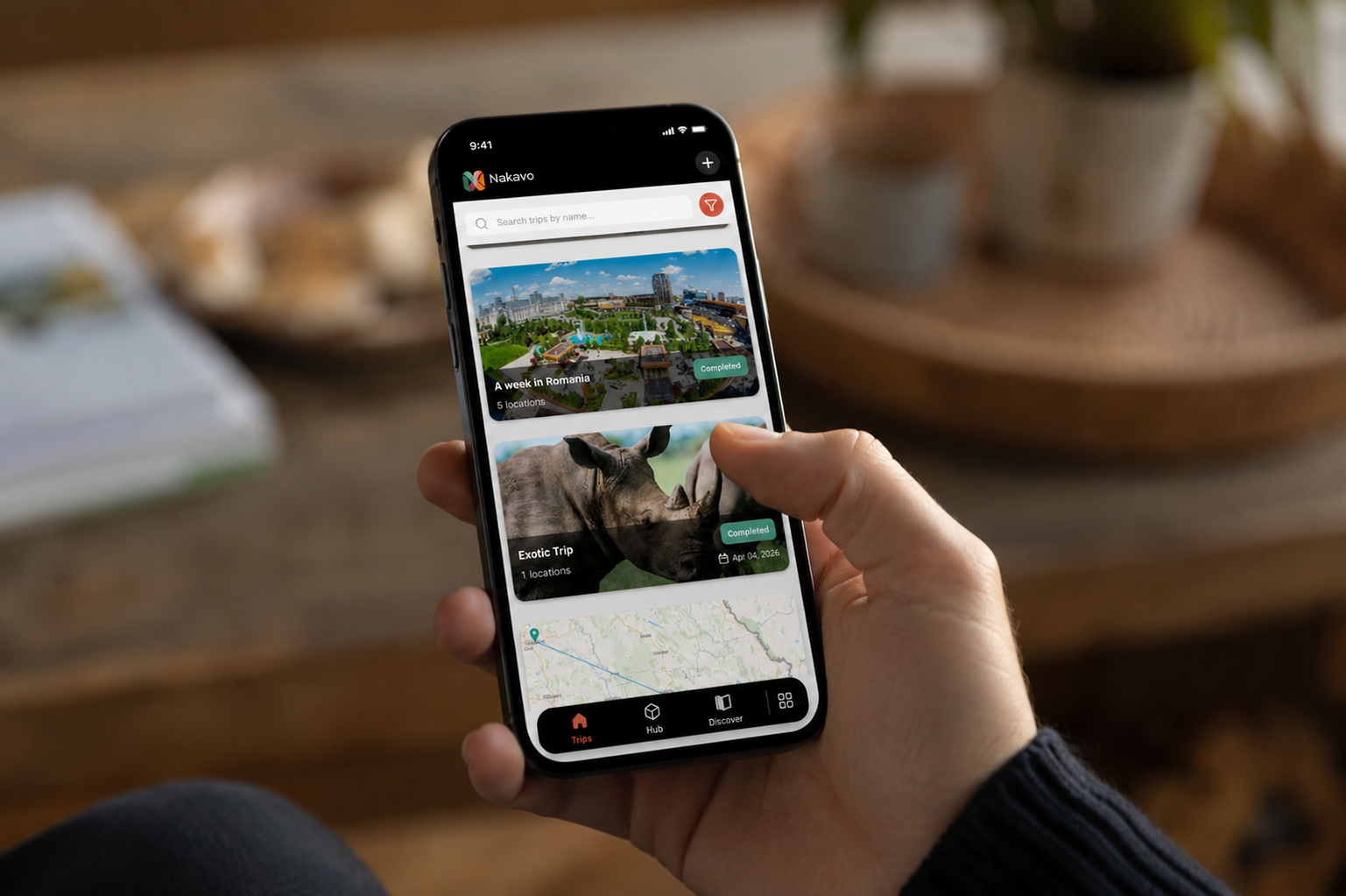
The three apps you've probably tried — Wanderlog, TripIt, and Roadtrippers
Wanderlog is the one most people graduate to when the browser tabs get out of control. It earns that. You can plot destinations on a map, drag them into order, add notes and links, and share the whole thing with your travel partner so they can edit it simultaneously. The collaboration is real — genuinely Google Docs-level for itinerary building. It's free for the core features and the map-based interface is intuitive.
Here's what it doesn't do: show you a feed. Wanderlog has public profiles. You can follow people. But there's no stream — no way to open the app and see what people are planning or have recently been. The discovery layer is essentially a search bar and some community guides. Which is fine. But it's not the same as inspiration from people whose taste you trust.
TripIt is a different thing entirely. TripIt doesn't help you plan — it helps you organise what you've already planned. Forward your booking confirmation emails to [email protected] and it turns them into a clean, synced itinerary with your flight times, hotel check-ins, and car reservations all in one place. Real-time alerts when your flight changes. Calendar sync. More than 22 million travellers use it, according to the company's own figures. It's very good at its specific job. The problem is that if you haven't booked anything yet, TripIt has absolutely nothing to offer you.
Roadtrippers is the road trip app. Genuinely strong database of points of interest — national parks, local diners, scenic overlooks that wouldn't show up in any other search. The problem is the words "road trip." It's designed around driving routes, and if you're planning anything else — a city break, an international trip, anything that involves a flight — the app works against you. The free version caps at seven stops, which is about enough for an afternoon drive.
The comparison, in plain terms
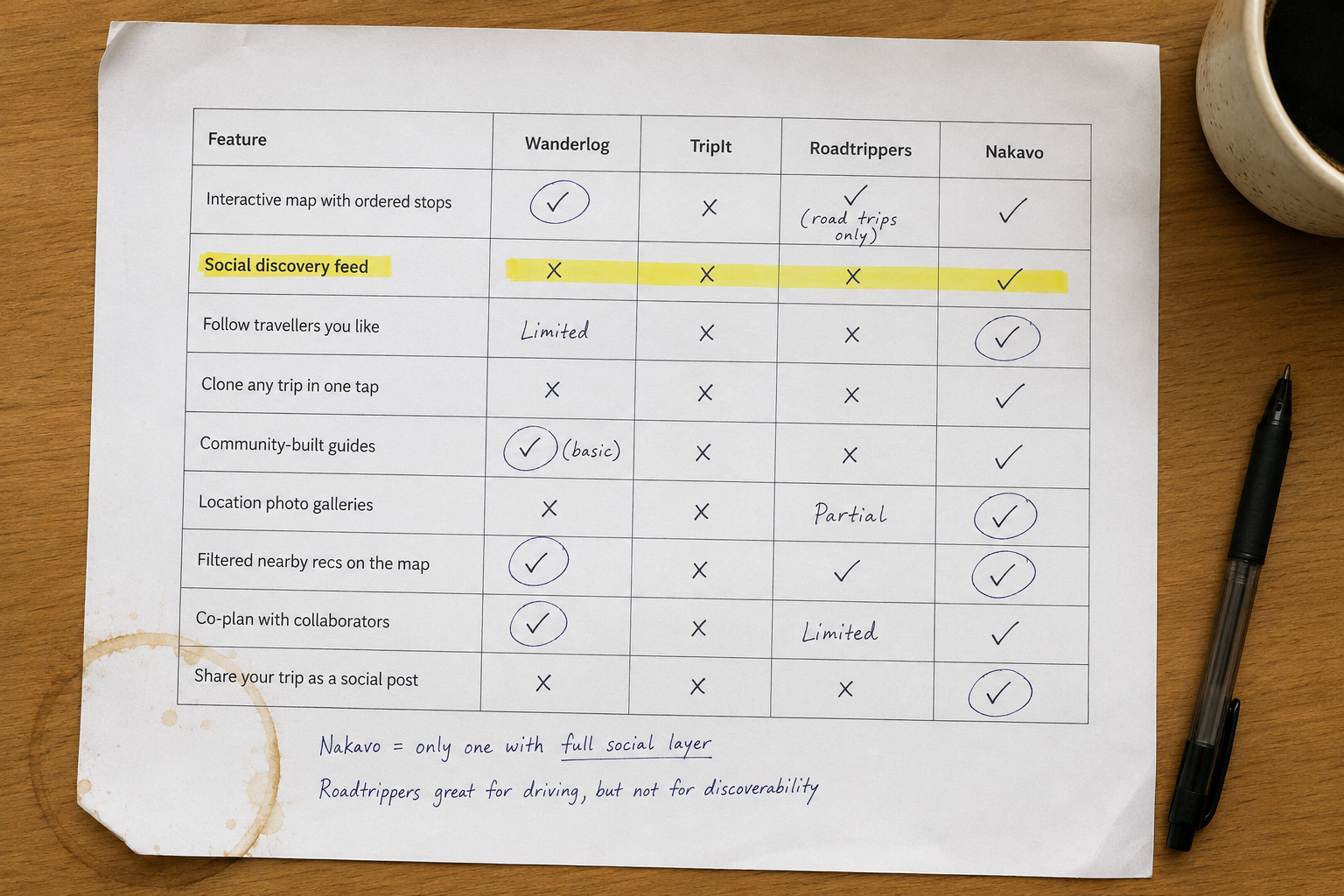
Social discovery: the gap everyone's ignoring
Think about how you actually get good recommendations. For films, you probably follow a friend on Letterboxd — someone whose taste has proven reliable, whose five-star list consistently contains things you love. For restaurants, it's an Instagram account you trust, or a Substack, or whoever sent you that note three years ago about the small plates place that you still tell people about.
For travel, you probably do the same thing. Someone tells you about a trip. You ask for details. They send you a list of places, maybe some photos, a rough itinerary. It's better than any algorithm because it comes from a person who knows what they liked, and you know what they like.
No major planning app has built a social discovery feed into the core product. Wanderlog lets you share trips by link. TripIt lets you share itineraries with companions. Roadtrippers lets you save places to a public profile. None of them have a feed — a stream of activity from the people you follow, showing you what they're planning and where they've been.
Nakavo does. You follow the travellers whose trips look like yours when you're at your best. When you open the app, you see what they're doing — which trips they've posted, which places they've added, which routes they've been on. That's not a feature. That's a completely different starting point for planning.
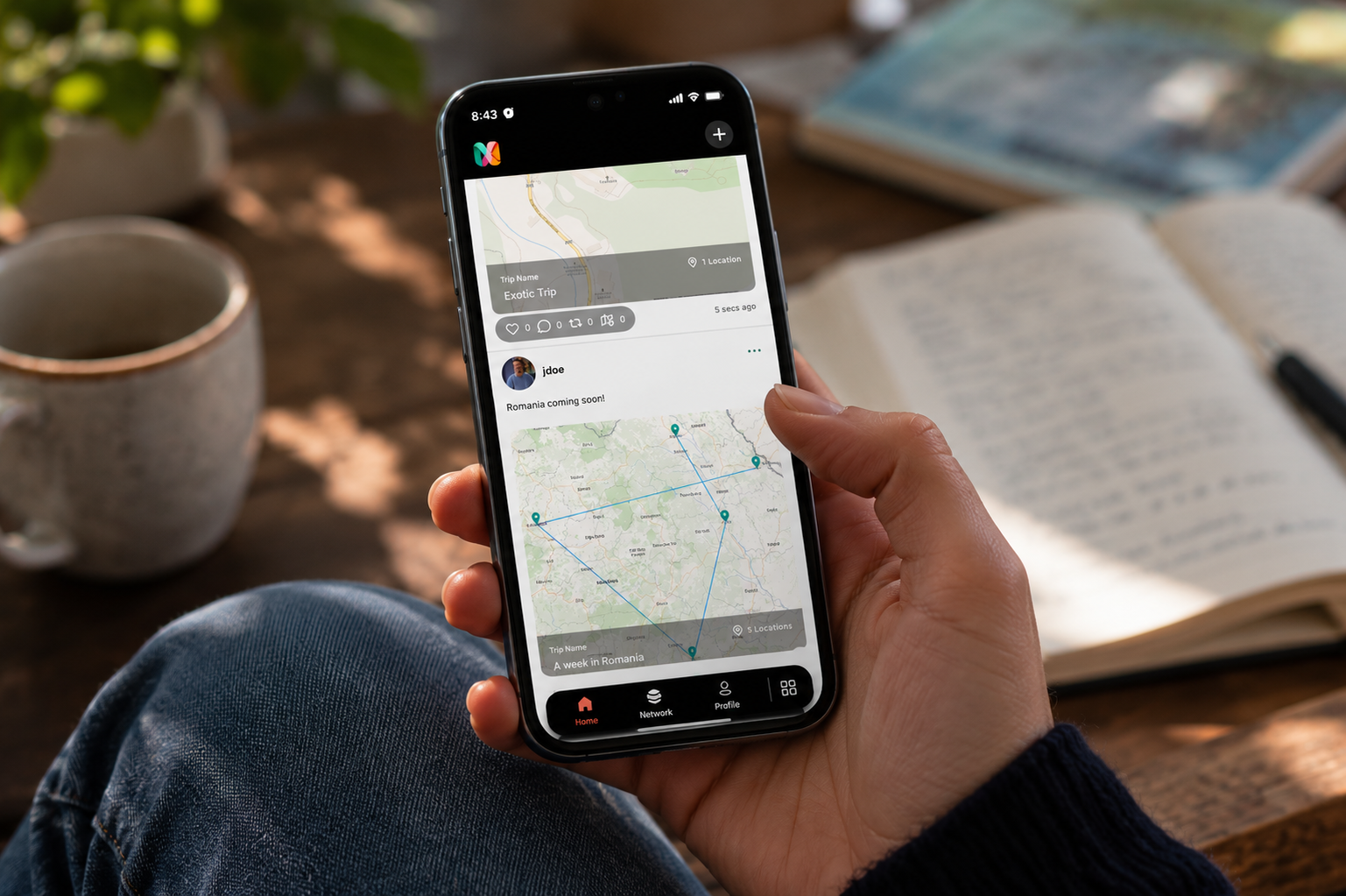
Clone a trip. Then make it yours.
Here is the specific thing Nakavo does that nothing else does.
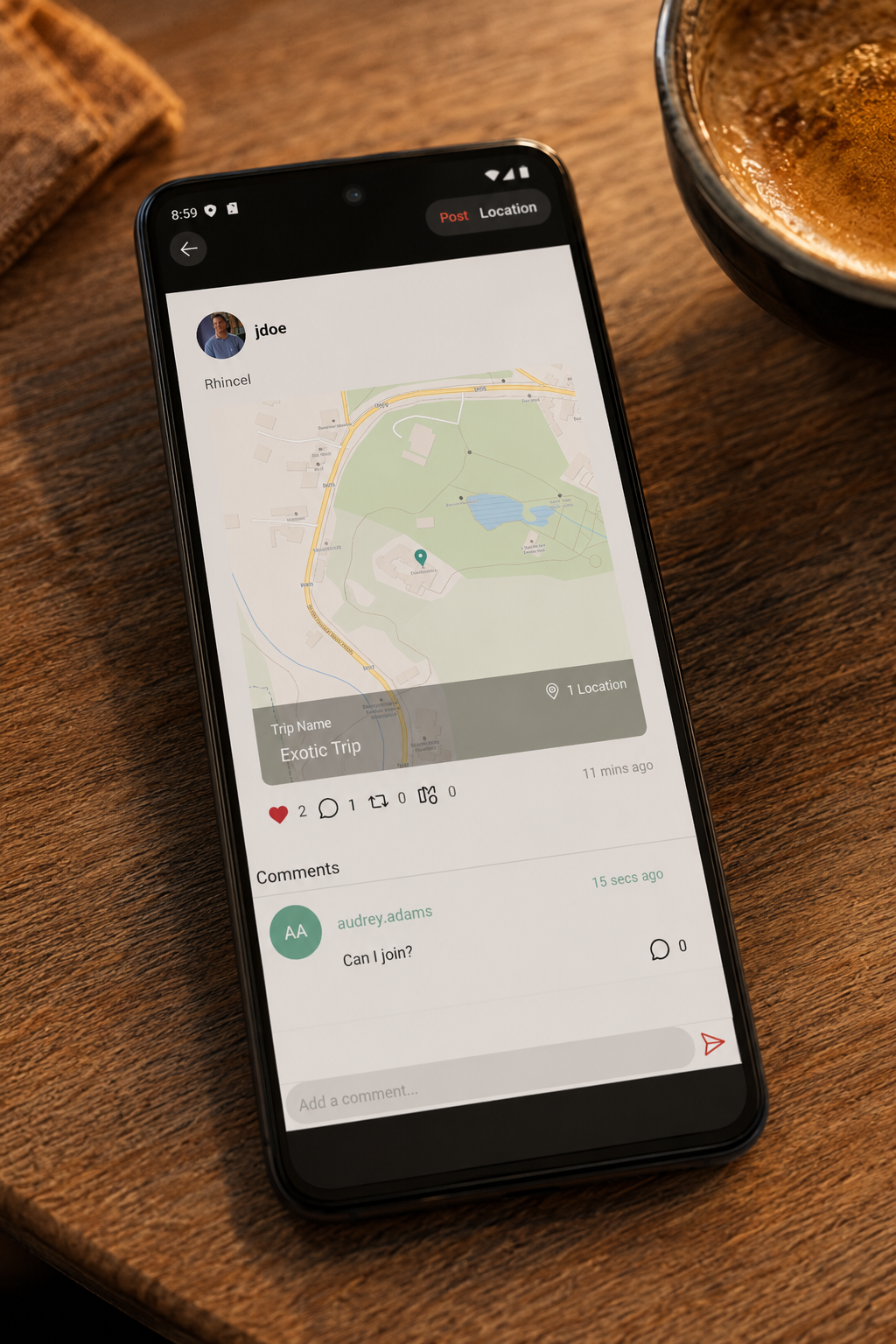
Someone posts a ten-day Balkans road trip. Kotor, Mostar, Sarajevo, Dubrovnik — every stop mapped, every annotation visible, photos from specific locations. You follow this person. You like how they travel. One tap: that trip is now in your planner, fully mapped, fully editable.
You delete two stops you don't have time for. You add one your friend mentioned last week. You pull up Nakavo's nearby recommendations — filtered to "restaurants" — and drop a few more into the route. You're done in four minutes. You're starting from something real.
Wanderlog's shared trips are viewable. You cannot clone them and immediately edit them as your own — they're inspiration, not a foundation. The gap between viewing and using is small but it makes all the difference.
"The nearby recommendations filter matters for the same reason. It's not a list of 'things near here' — it's a filter you apply directly on the planning map."
The nearby recommendations filter matters for the same reason. It's not a list of "things near here" — it's a filter you apply directly on the planning map, by category, so you can see what's relevant to where you're going and slot it into your route without leaving the planning interface.
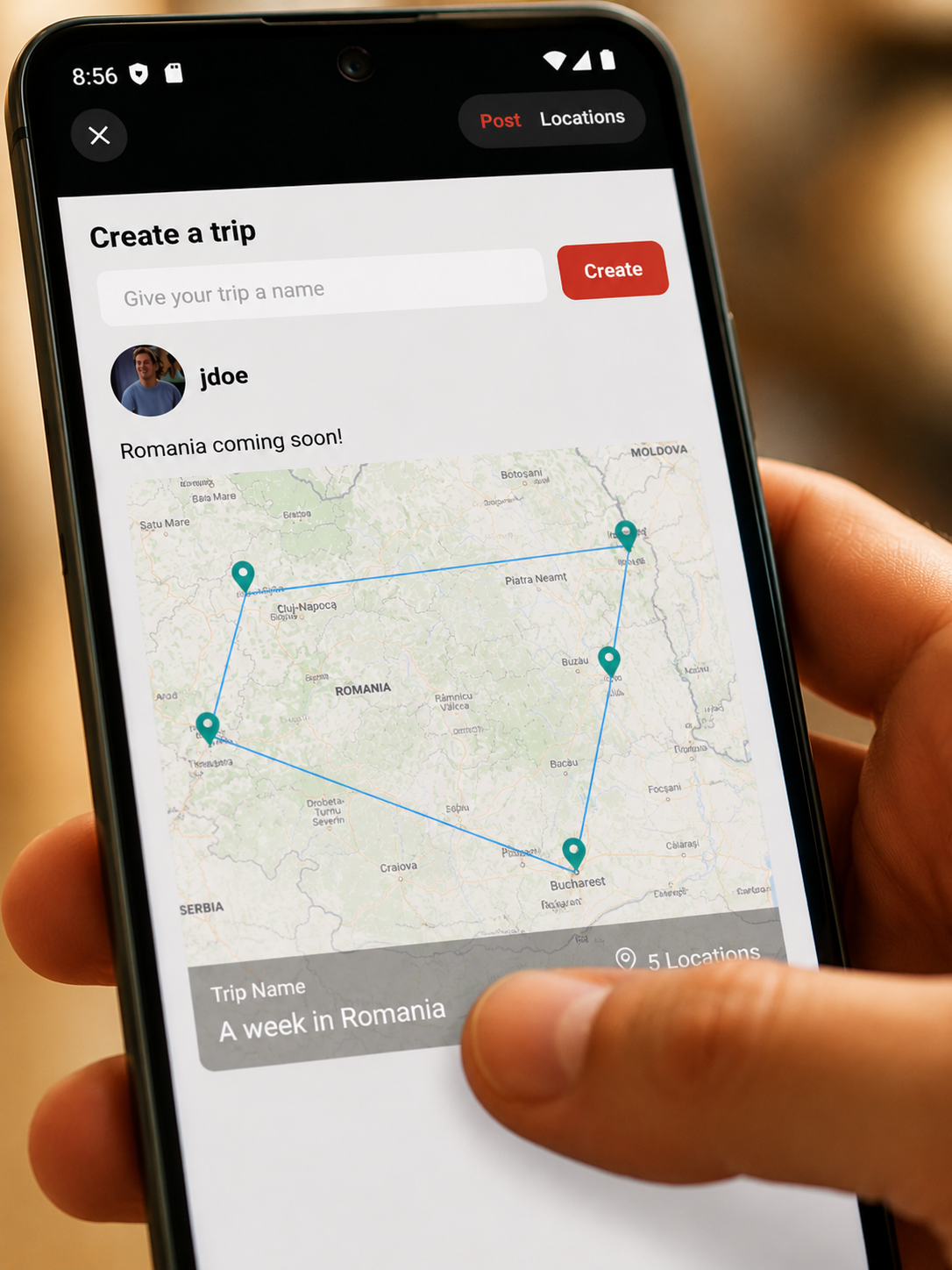
After the trip: closing the loop
This is what travel blogs and travel writing have always done — given people a real experience to plan from, rather than a database of star ratings. Nakavo makes that native to the planning tool.
Wanderlog lets you share a finished itinerary via link. TripIt lets you share a bookings summary. Roadtrippers lets you export a route. None of them let the trip become something new.
In Nakavo, a finished trip becomes a social post. The route is visible, the stops are annotated, the photos are attached. The people who follow you can see it, engage with it, or clone it for their own trip. The experience you had becomes the foundation for someone else's planning. The loop closes.
Who should use which app
Use Wanderlog if: You know your destination, you're travelling with people, and your main challenge is building and sharing a structured itinerary that everyone can edit. It's the best collaborative planner for people who are already in "planning mode."
Use TripIt if: You book a lot of trips, especially for work, and your problem is keeping everything organised after you've booked it. If you want flight alerts, hotel confirmations, and car bookings in one synced calendar and you're not interested in discovery, TripIt earns the subscription.
Use Roadtrippers if: You're doing a US road trip and want to find things along your route. Purpose-built and genuinely good at it. Don't use it for anything else.
Use Nakavo if: You're still figuring out where to go, or you know where you're going but want to plan from real experience rather than search results. If you've ever wished you could steal a good itinerary and make it yours, this is the app that built that. If you find travel inspiration through people rather than algorithms, Nakavo is the app that works the way you already think.
One honest note: Nakavo's community is growing. For well-travelled destinations — major European cities, popular road trips, well-worn backpacker routes — you'll find rich libraries of community trips and guides. For more obscure destinations, the library may be thinner. Worth knowing.
The verdict
The problem with most travel apps is not that they're bad. Wanderlog is good. TripIt is very good at what it does. Roadtrippers knows its lane.
The problem is that they were built for travellers who know what they want. They're optimised for the planning phase, not the discovery phase. They're tools for executing a decision, not for arriving at one.
"Nakavo is built for the step before the planning phase. The step where you stop planning in a vacuum and start planning from something real."
Nakavo is built for the step before. The follow-someone-whose-taste-you-trust step. The clone-a-real-trip-and-edit-it step. The step where you stop planning in a vacuum and start planning from something real.
If that's where you are — which, most of the time, is where everyone is — it's the app that actually gets it right.